Designing For Rest.
Optimising Streaming For Better Sleep.
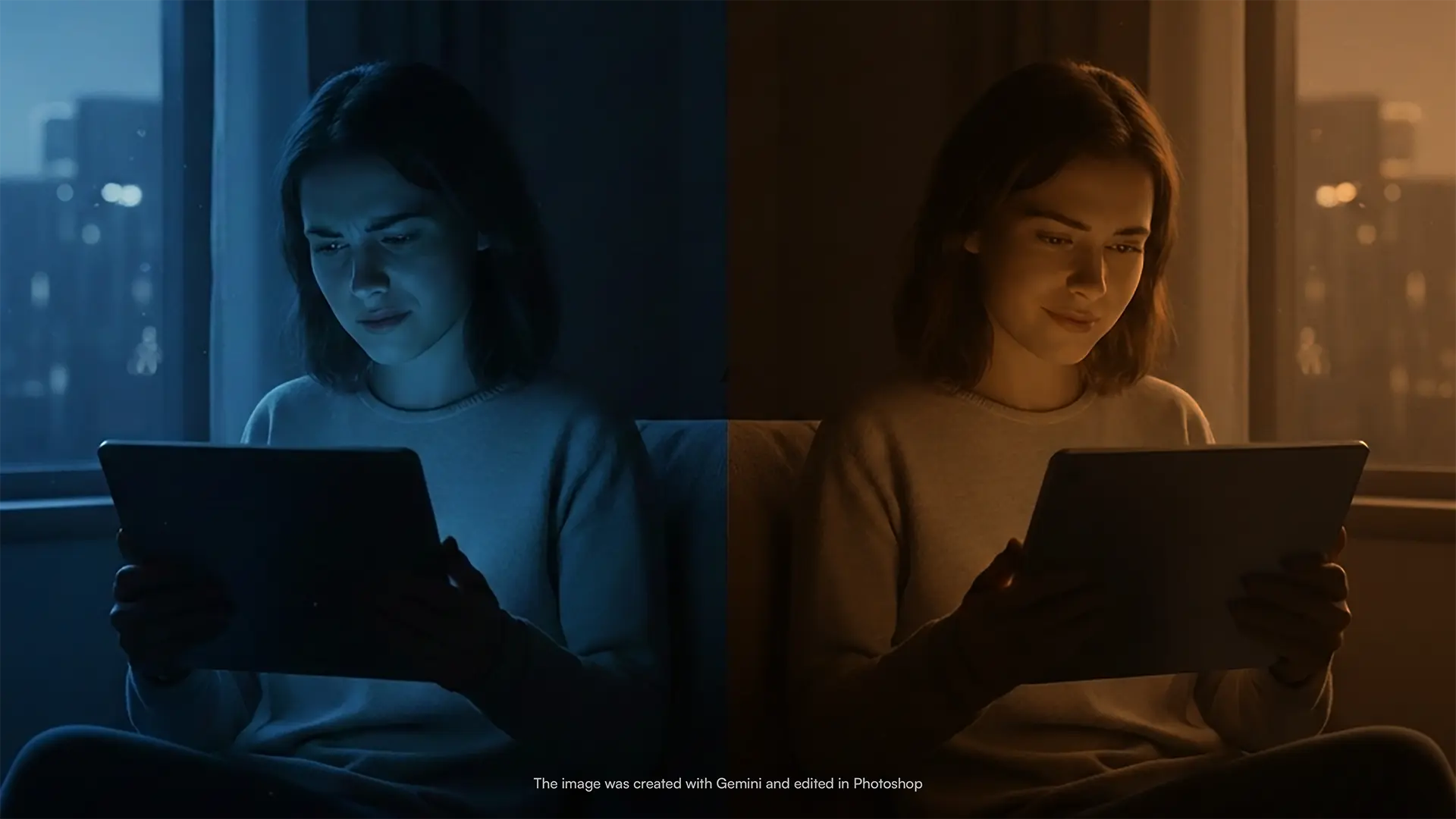
Streaming platforms are often used as “therapy” or a “sleep pill” to help users unwind from daily stress.
However, standard app features directly conflict with human biology, disrupting sleep architecture and suppressing melatonin.
When Entertainment Becomes a Sleep Ritual
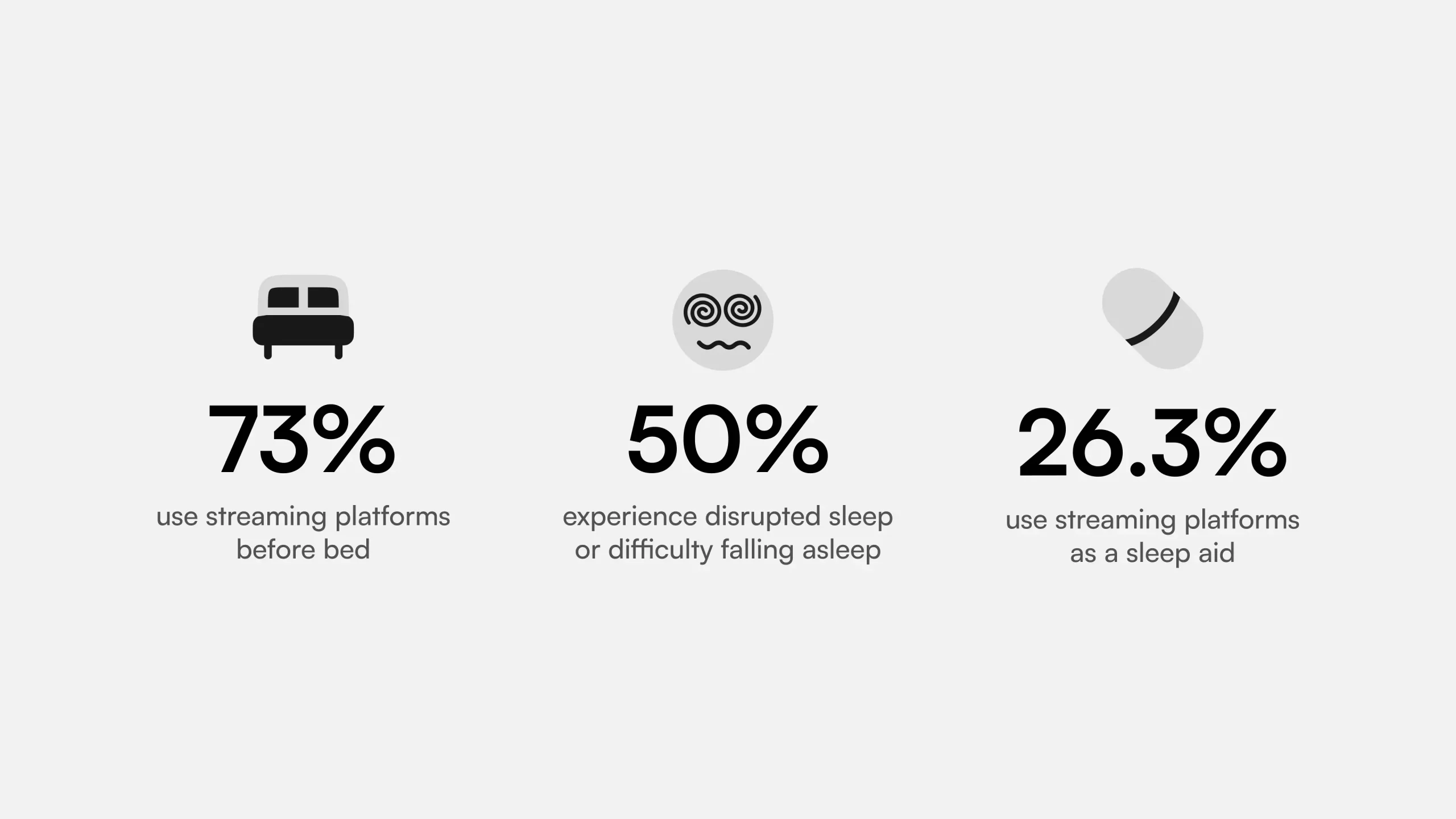
Contextual research and interviews with users aged between 25 and 55 revealed a significant trend:
• High Engagement: 73% of participants use streaming platforms before bed.
• The “Sleep Pill” Effect: 26.3% specifically use streaming to help them fall asleep.
• Key touchpoints: Users reported being startled awake by loud ad trailers at the end of episodes and losing their place in a series because the app continued playing while they slept.
Evidence-Based Thresholds
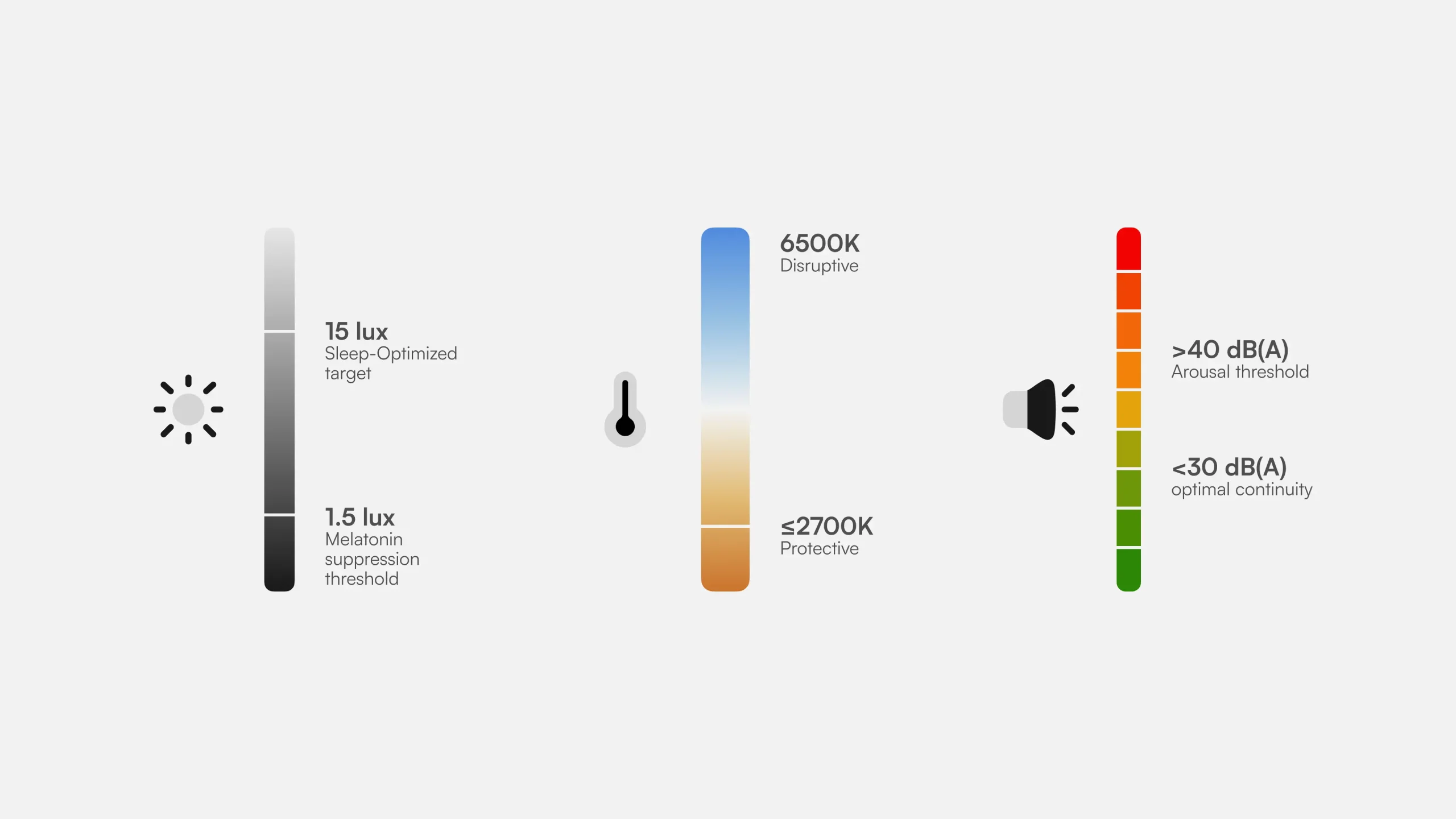
To solve these issues, the design must adhere to specific physiological thresholds for light and sound:
1. Light: In a room with an illuminance of ≤15 lux, the screen brightness should be kept below 10-50 nits to avoid suppressing melatonin production (which starts at just 1.5 lux). Additionally, the color temperature should be ≤2700 K (warm/orange) to reduce blue light and minimize circadian disruption.
2. Sound: To maintain sleep continuity, the audio level should ideally remain below 30 dB(A). Sudden peaks over 40-45 dB trigger brain arousal and should be avoided.
Architecting the Onset
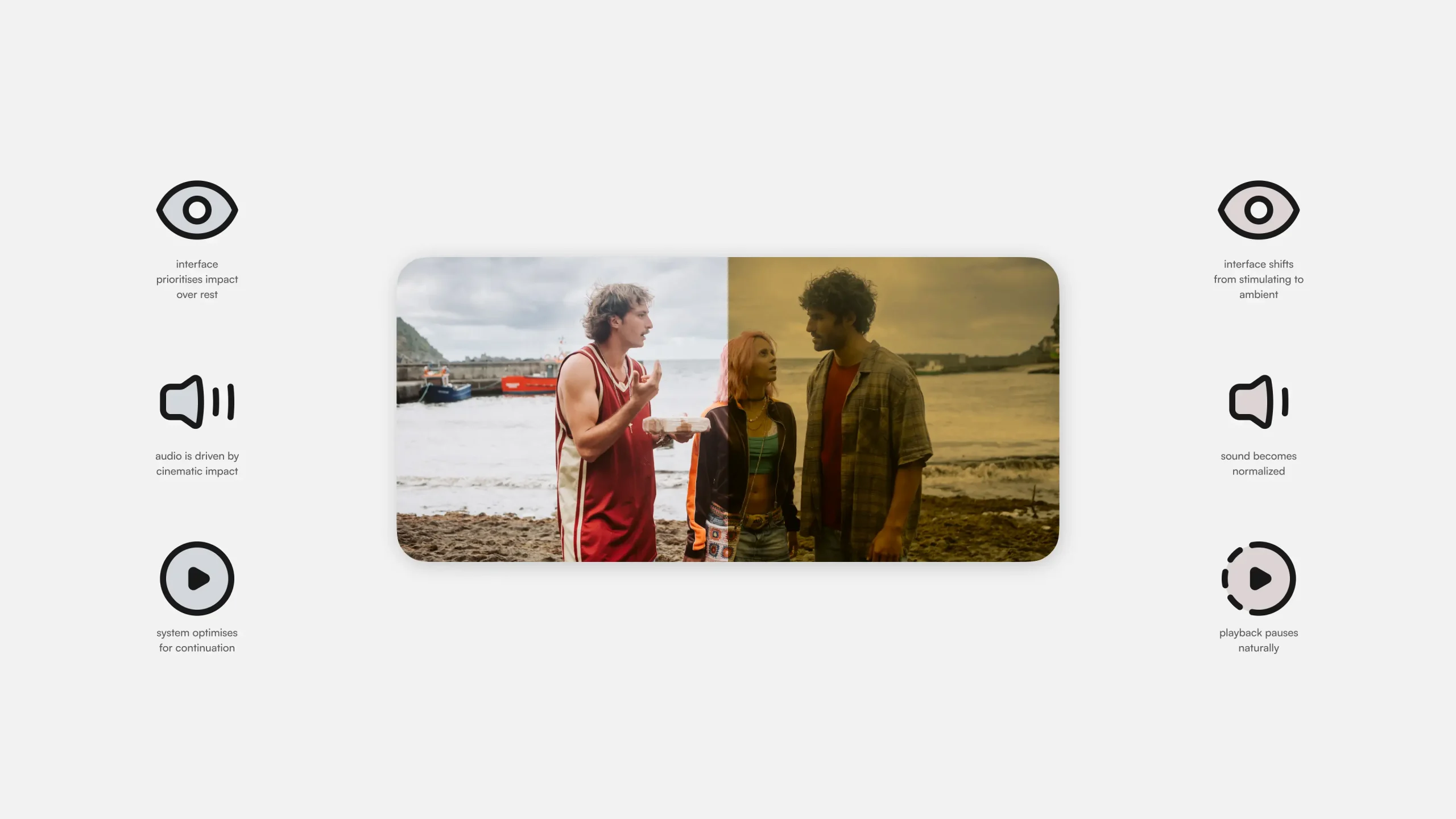
Doze acts as a contextual layer that adapts light, sound, and interaction patterns to match pre-sleep physiology.
Visual Softening
• Luminance capped to align with ≤15 lux exposure
• Warm colour temperature (≤2300 K)
Audio Stability
• No sudden peaks
• Smoother transitions
• Stable audio under ~30 dB(A)
Playback
• No autoplay
• Passive sleep check
• Resume from last conscious moment
Integrating Without Interrupting
Designing Doze wasn’t just about physiology. It was about respecting an interface users already know by muscle memory.
An early constraint is that there are two playback contexts. Although they are visually similar, they carry different behavioral expectations. Series playback implies continuity and next-episode logic, whereas movies are finite.
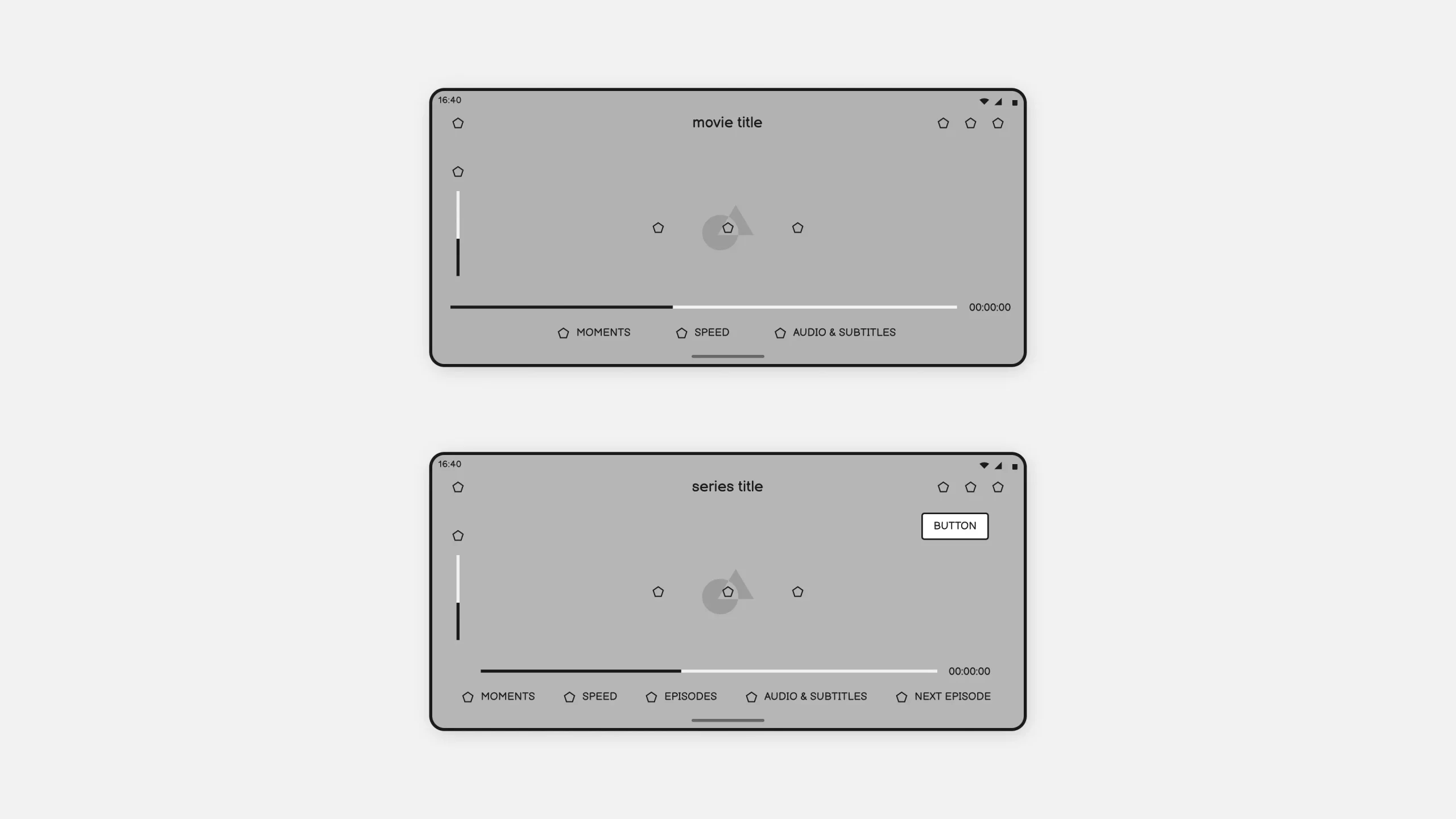
Placement of the Toggle
The final decision was to place Doze within the player control layer, alongside brightness.
This Prevented:
• Introducing a new mental model
• Polluting the main navigation
• Forcing users to exit playback to activate it
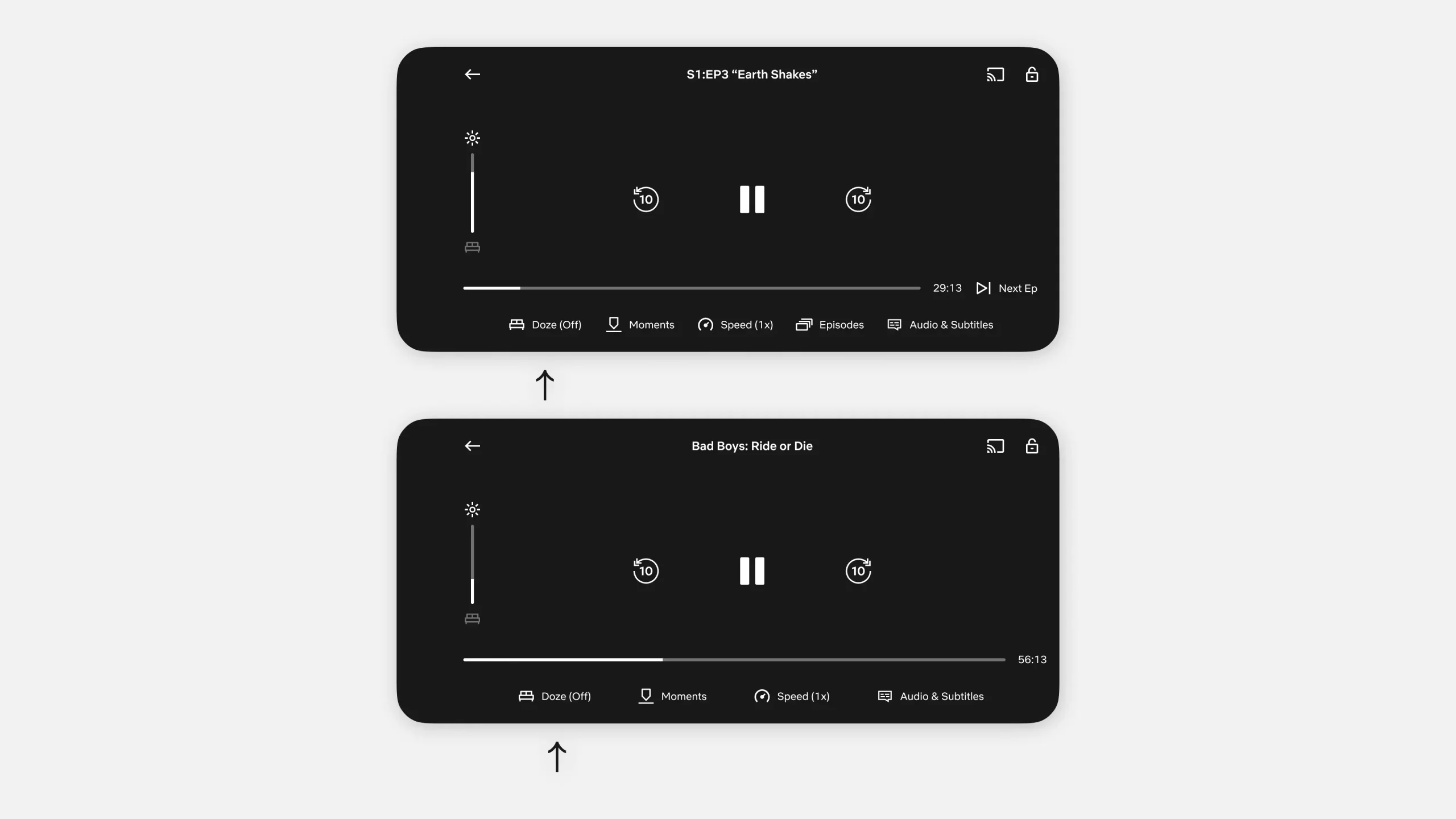
The system provides guidance towards calmer settings while enabling users to customise the experience according to their personal preferences.
Users can choose whether to enable audio compression and adjust the screen temperature intensity.

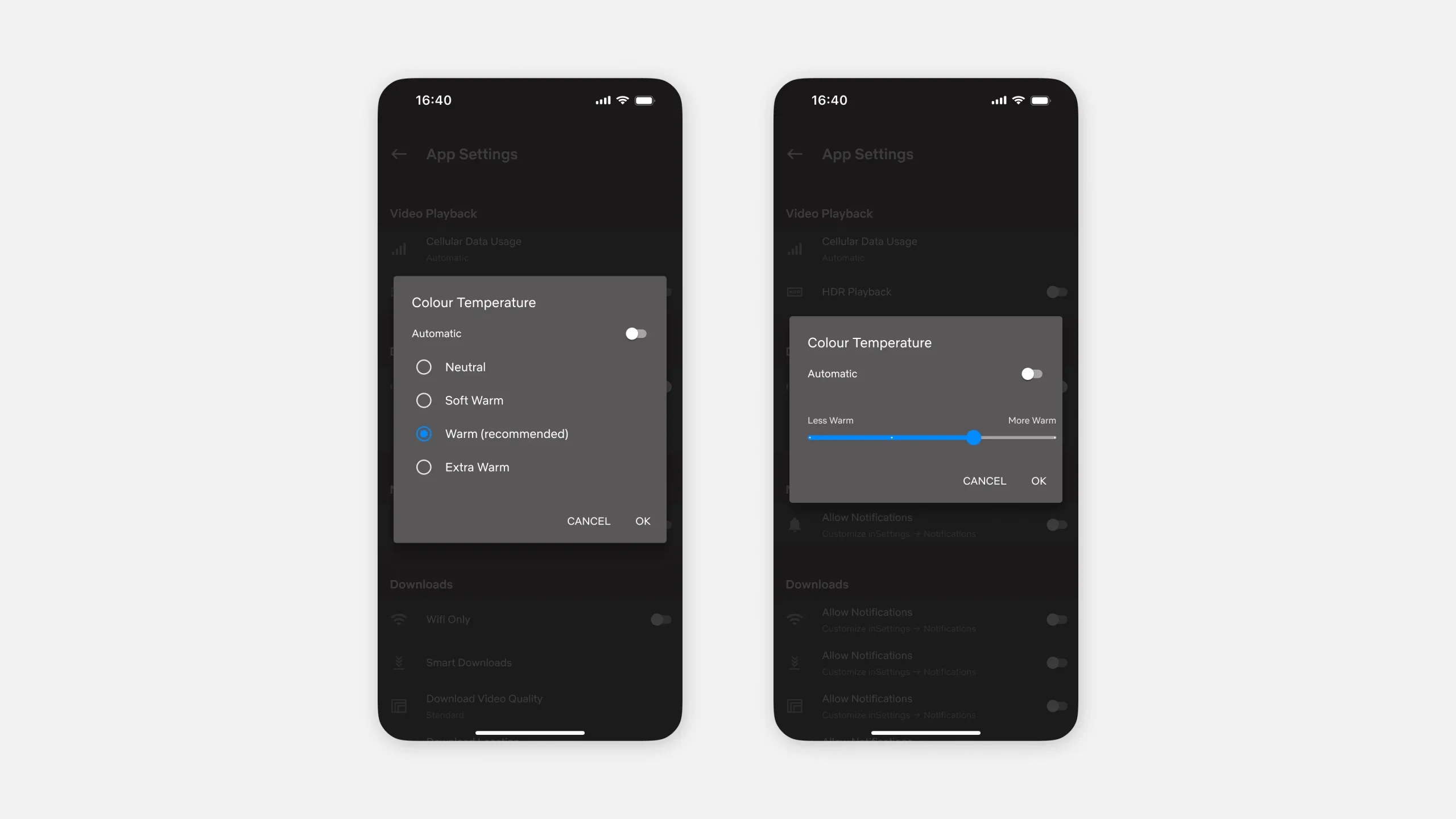
Why Not a Color Temperature Slider
Early explorations included a dynamic slider to adjust color temperature manually in the Settings screen.
While flexible, it introduced two problems:
→ No live feedback in system settings
→ Cognitive load at the wrong moment
Designing for Trust
By aligning streaming technology with circadian health requirements, such as maintaining a brightness level of 10-50 nits and stable audio at 30 dB or less, platforms can transform from sleep disruptors into helpful tools for evening relaxation.
These features allow the 50% of people who fall asleep while watching TV to do so without compromising their sleep quality.
The long-term metric is trust.
Let’s build meaningful products
I work closely with teams to design thoughtful, effective products.
If you’re building something meaningful, I’d love to hear about it.
